Person: XN DUAN
E-mail: yuankuoduan@gmail.com
WhatsApp/Wechat: +86 15130724685
Add: Zhenggang road, Industrial development zone, Botou city, Hebei province China.
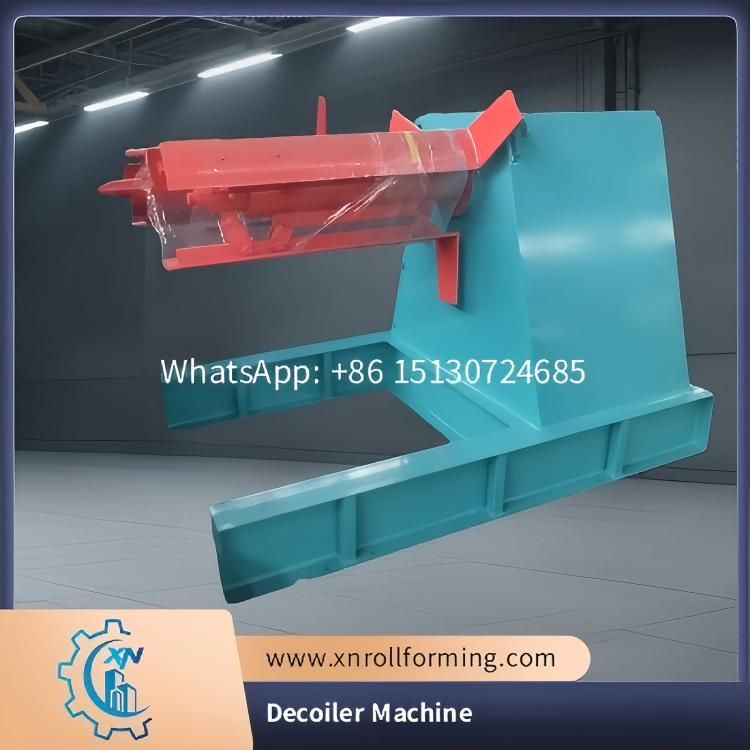
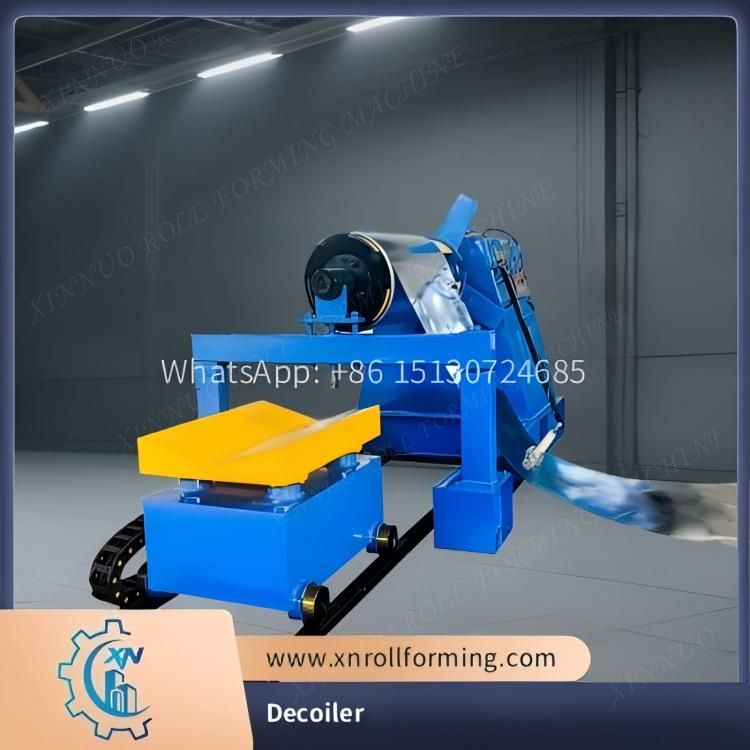
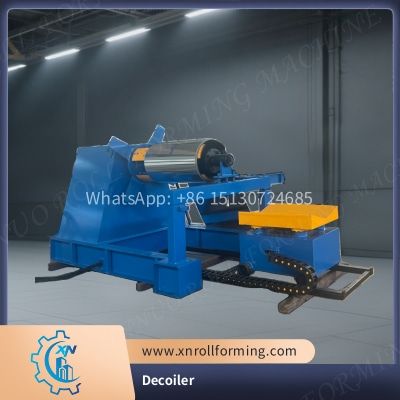
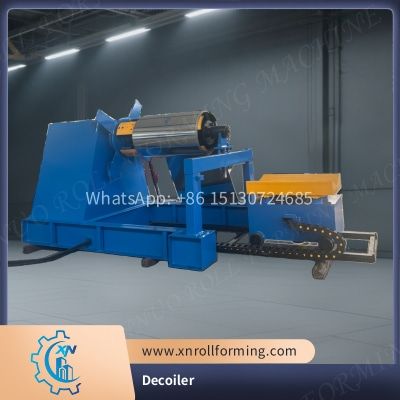
Decoiler – Reliable Coil Handling for Continuous Production
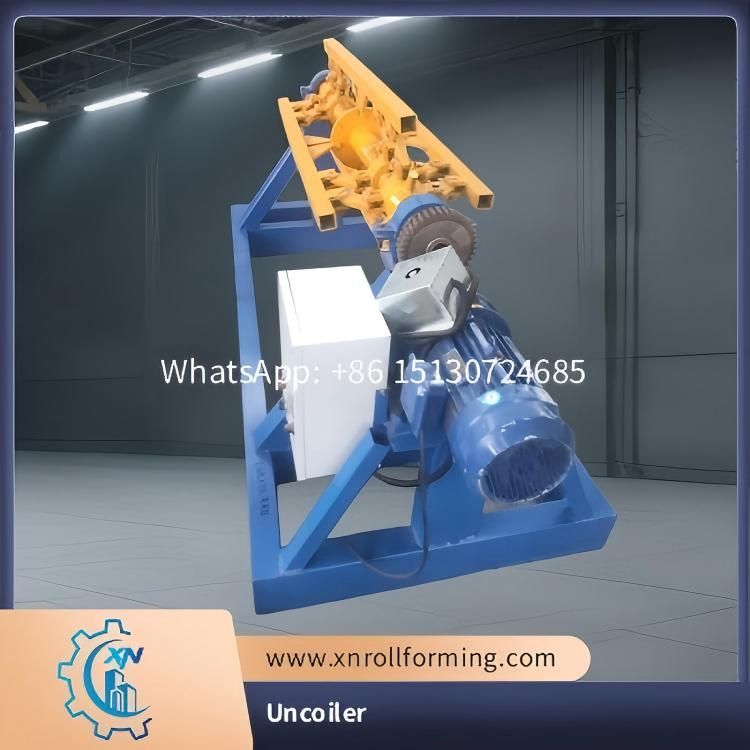
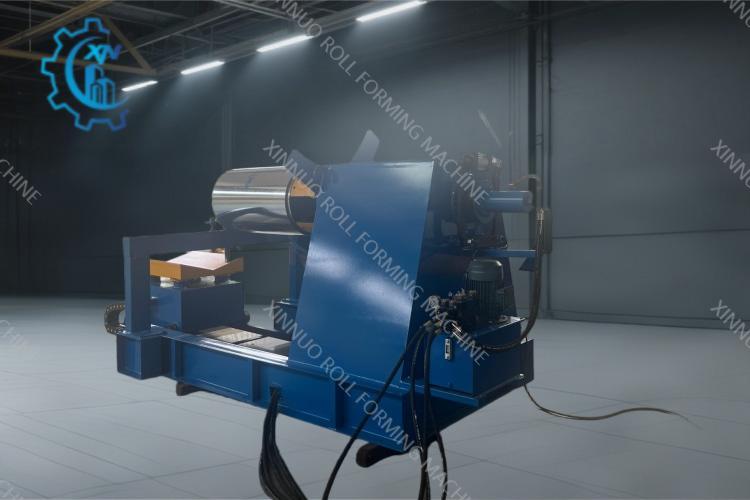
In modern sheet metal forming and fabrication, uninterrupted material supply is crucial to maintaining high production efficiency. The Decoiler—also known as an uncoiler or coil unwinder—is a fundamental piece of equipment designed to hold, support, and smoothly feed metal coils into downstream machines such as roll formers, cut-to-length lines, and stamping presses. It ensures the forming line receives a steady, well-aligned strip of material, preventing stoppages and reducing manual handling.
Purpose and Core Function
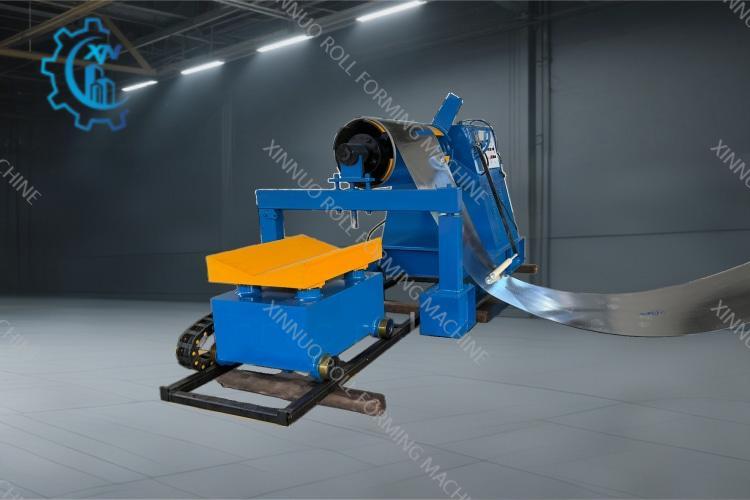
The Decoiler’s primary role is to securely support a heavy coil of steel, aluminum, or other metals and unwind it at a controlled pace. By maintaining proper coil tension and alignment, it safeguards the quality of the material being processed. Without a well-designed decoiler, downstream equipment can suffer from uneven feeding, material distortion, or even costly stoppages.
Construction and Design Highlights
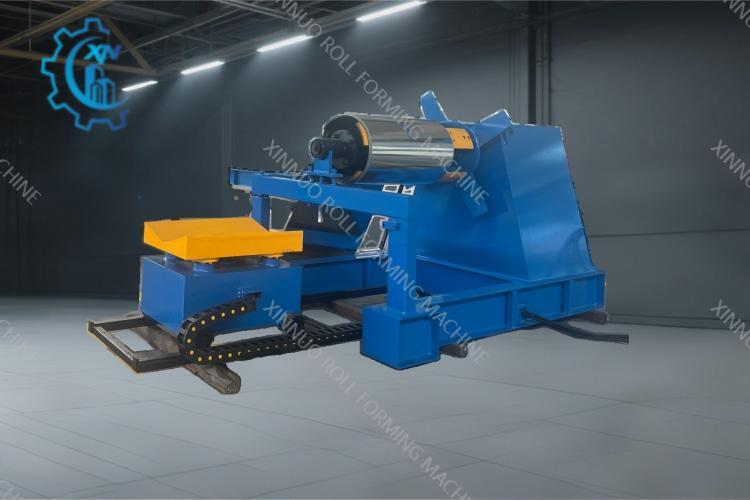
A typical decoiler consists of a sturdy main frame, a mandrel or expanding spindle to hold the coil, and a drive system to control unwinding. Depending on production needs, it can be configured as manual, motorized, or fully automatic with hydraulic expansion. Heavy-duty welded steel frames give the structure the strength to handle large coil weights—often ranging from 3 to over 15 tons—without vibration or instability.
Operation and Control
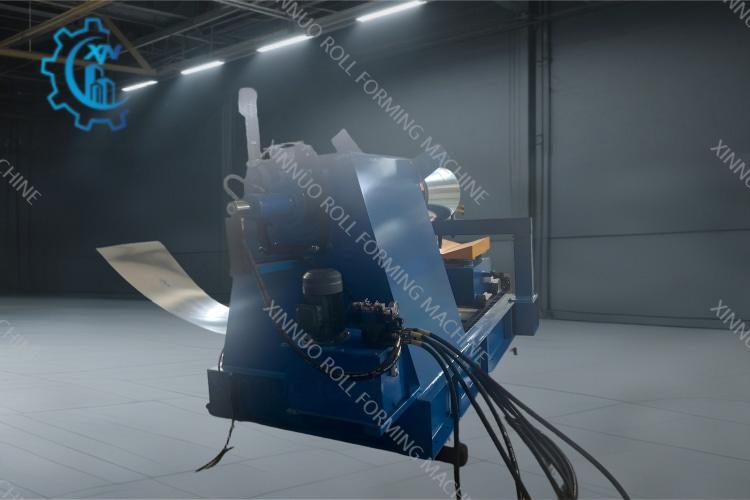
In motorized or automatic models, a variable-speed drive coordinates with the downstream machine to match its feeding rate. This ensures the strip moves smoothly, avoiding slack or over-tensioning. Hydraulic systems make coil loading and centering faster, reducing operator effort and improving safety. Some advanced decoilers are equipped with pneumatic or mechanical braking systems to prevent free spinning when the line stops.
Safety and Ergonomics
Handling metal coils can be dangerous if not managed properly. Modern decoilers are designed with safety in mind—featuring guards, emergency stop systems, and smooth-operating expansion mechanisms to minimize operator risk. Optional coil car systems can lift and load coils directly onto the mandrel, reducing the need for overhead cranes or forklifts during setup.
Integration with Production Lines
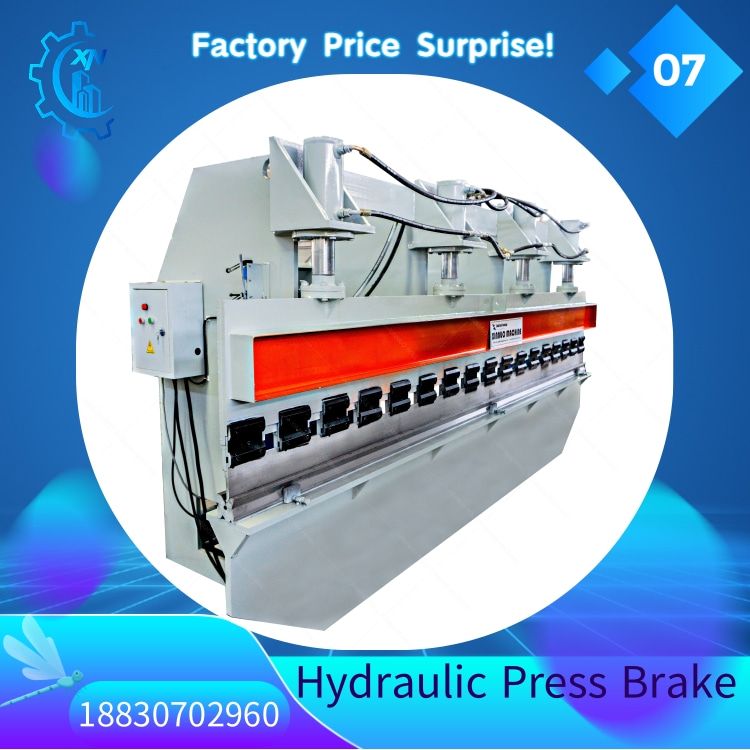
A decoiler works seamlessly with other equipment, feeding material into roll forming machines, shearing lines, press brakes, or punching systems. In high-volume manufacturing, it is often paired with a straightener or leveling machine to ensure the strip is perfectly flat before entering the next stage of production. This integration is key to producing consistent, high-quality products with minimal waste.
Applications Across Industries
From roofing sheet production to automotive parts manufacturing, decoilers are essential in any facility that processes metal coil stock. Whether it’s a small-scale workshop or a fully automated factory, the decoiler ensures that material feeding remains consistent, precise, and safe.
A Foundation for Efficiency
While the decoiler may seem like a supporting player in the manufacturing process, its role is vital. A well-built decoiler not only boosts line efficiency but also protects downstream machines, improves product quality, and reduces downtime. For manufacturers aiming to streamline production, investing in a high-performance decoiler is a smart and lasting choice.
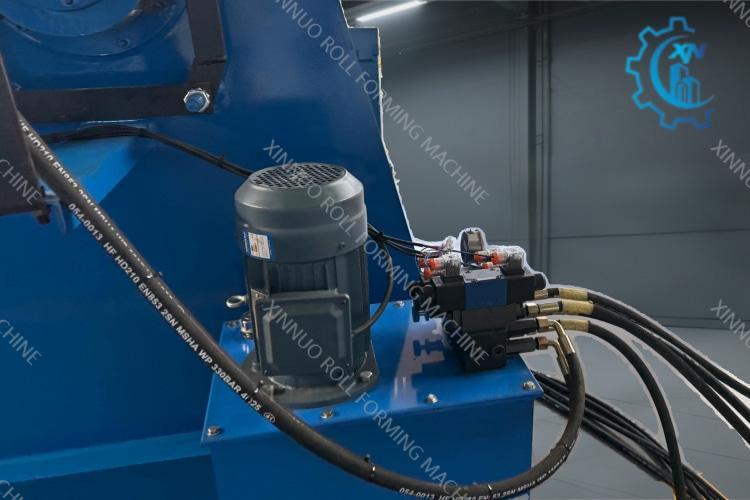
At XINNUO, we are committed to delivering high-performance metal roll forming machines tailored for global industrial needs. Our equipment offers reliable and flexible production capabilities to meet the demands of modern construction and manufacturing industries.


 8618830702960